

On January 15, 1934, in the quiet town of Taiping, a child was born who would one day redefine the future of medicine in Malaysia. Nadason Arumugasamy’s beginnings were humble, but his life’s journey would become an inspiration to all.
Fondly remembered as Dr Aru, he rose from simplicity to become Malaysia’s first neurosurgeon, a pioneer who not only entered an uncharted field but built its very foundation in the country. His story is not merely one of personal success, but of national transformation.
The roots of neurosurgery in Malaysia trace back to 1962, when Dr Roy Clifton Selby arrived under the USA Care/Medico programme. Tasked with establishing the first neurosurgical unit at Ward 25 of Kuala Lumpur General Hospital, Selby began nurturing a generation of Malaysian doctors, sending them to the United States for specialised training.
Among the first group selected was Arumugasamy, a young doctor whose determination set him apart. After earning his MBBS from University of Malaya in 1960 and serving at the same hospital, he was handpicked in 1963 as the nation’s first neurosurgical trainee.
His training journey took him across the United States, where he underwent rigorous preparation in multiple disciplines, neurophysiology, neuropathology, and neurosurgery. It was a path filled with opportunity, and like many before and after him, he was offered the chance to remain abroad, where comfort and recognition awaited.
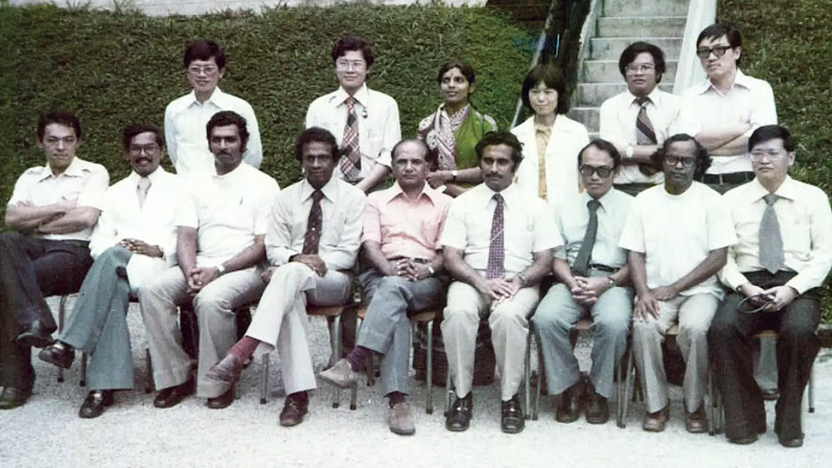
But Arumugasamy chose differently.
In 1969, he returned home not to ease, but to responsibility. That same year, he became the first Malaysian to be certified by the American Board of Neurological Surgery. By 1970, he assumed the role of Head of Neurosurgery at Kuala Lumpur General Hospital, stepping into a position that demanded not just skill, but extraordinary resilience.
At that time, he was the country’s only neurosurgeon.
The weight of an entire specialty rested on his shoulders. He was not just a surgeon, but also a neurologist, radiologist, teacher, researcher, and administrator often all at once. In an era with limited resources and support, he built systems where none existed, and solutions where none were available.
Yet, he did not merely sustain the field, he expanded it.
In 1970, he spearheaded the creation of the Tunku Abdul Rahman Institute of Neurosciences (IKTAR), an integrated centre that brought together neurology, psychiatry, and neurosurgery under one roof. When it was officially opened in 1975, it stood as one of the region’s most advanced medical facilities, placing Malaysia on the map in neurosurgical excellence.
Beyond infrastructure, Arumugasamy understood that true progress lay in people. Through the Neurosurgical Foundation of Malaysia, he raised significant funds to enhance facilities and ensure the growth of neurosurgical services nationwide. More importantly, he mentored young doctors, shaping the next generation with the same discipline and purpose that defined his own career.
Even amidst overwhelming responsibilities, he remained deeply committed to knowledge. He authored more than 60 research papers, contributing insights that influenced medical practices not only in Malaysia, but also in neighbouring countries such as Singapore, Hong Kong, and Indonesia.
His work earned him recognition both locally and internationally. He served in numerous global medical organisations, bringing Malaysian expertise to the world stage while continuously advocating for progress at home.
In recognition of his immense contributions, he was awarded honours such as the Darjah Sultan Ismail Johor (DSIJ), which carries the title Dato, and the Johan Setia Mahkota (JSM). Yet, beyond titles and accolades, his true legacy lay in the lives he touched and the system he built from the ground up.
On December 19, 2003, at the age of 69, Dr Aru passed away. But his impact did not end there.
Today, every neurosurgical procedure performed in Malaysia, every specialist trained, and every life saved in this field carries a trace of his pioneering spirit. He did not simply practise medicine, he carved a path where none existed, and in doing so, gave a nation the gift of possibility.
Dr Aru’s story is a reminder that greatness is not defined by where one begins, but by the courage to return, to serve, and to build something that will outlive oneself.
Source / Image Credit : FMT , researchgate , NAM