


The Ananthapura Lake Temple at Kerala dedicated to Lord Ananthapadmanabha, is known not only for its spiritual heritage but also for one of India’s most intriguing temple legends - Babiya, the temple’s guardian crocodile.
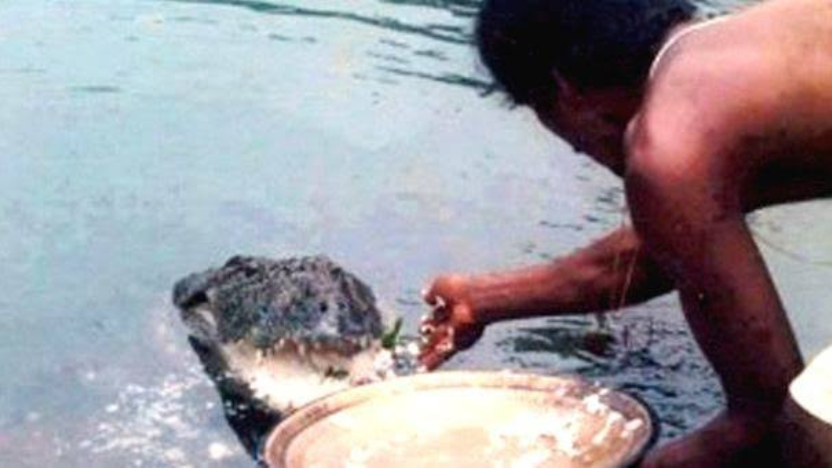
For nearly seven decades, devotees believed the temple and its sacred lake were protected by Babiya, a gentle crocodile revered for her calm nature and unusual vegetarian diet. Unlike ordinary crocodiles, Babiya was never seen harming humans, fish, or other creatures in the lake. Instead, she was fed daily by the temple priests with nivedyam, a simple offering of rice gruel mixed with jaggery following the noon prayers
Temple authorities and local residents recount that Babiya responded obediently when called by name. Emerging quietly from a nearby cave, the crocodile would accept the offering and retreat peacefully back into the waters, reinforcing the belief that she was no ordinary animal, but a divine protector of the shrine.
After Babiya’s death in 2022, the lake remained eerily still for several months. However, in November 2023, devotees were astonished when another crocodile appeared in the same lake. Many believe this marked the return of the temple’s guardian, and the new arrival is now lovingly referred to as the new Babiya.
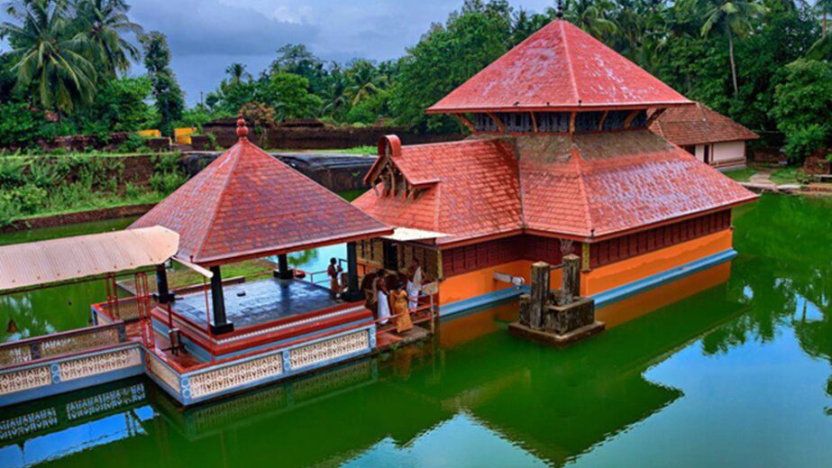
R. Udayakumar, chairman of the temple committee, has stated that historical records indicate a crocodile named Babiya lived in the temple lake even before India’s independence. According to available documents, British soldiers allegedly shot a crocodile in the lake in 1942. Yet, within days, another crocodile appeared, and devotees continued to call her Babiya. Since then, temple priests have protected the crocodile and maintained the tradition of offering daily nivedyam.
Remarkably, no one has ever witnessed Babiya consuming fish or attacking other animals. Her docile behaviour and strict vegetarian diet have only deepened the mystique surrounding her presence. What further adds to the mystery is the absence of any nearby rivers or large water bodies from which a crocodile could naturally migrate into the temple lake.
Local folklore suggests that only one crocodile exists in the lake at any given time, and that when one dies, another appears mysteriously to assume guardianship. Elders in the village claim that over the past 150 years, only three such crocodiles have been seen, each believed to be a continuation of the same divine presence.
The spiritual significance of the temple extends beyond the legend of Babiya. The idol of the presiding deity, Lord Ananthapadmanabha, is crafted using the rare and intricate Katu-Sarkara-Yogam method. This ancient technique involves the use of 108 natural ingredients sourced from the sea, earth, plants, and animals. The idol is constructed layer by layer, resembling the human body, with elements symbolising bones, muscles, skin, and even nerves formed from plant fibres. The complexity of this process reflects the temple’s deep-rooted spiritual and ritualistic traditions.
According to legend, the temple’s origins are linked to Sree Vilvamangalathu Swami, a revered saint devoted to Lord Vishnu. During intense penance, the Lord appeared before him in the form of a mischievous child. Annoyed by the child’s behaviour, the saint pushed him aside, causing the child to disappear into a cave. A divine voice then instructed the saint to travel to Ananthakadu to witness the Lord once again.
Following this guidance, the saint emerged from the cave into what is now Thiruvananthapuram, where the famed Ananthapadmanabha Swamy Temple stands today. The cave associated with this legend still exists near the Ananthapura Lake Temple, and it is believed that Babiya guards both the cave and the sanctity of the shrine.
Another popular tale recounts that a British soldier who shot the crocodile in the 1940s died shortly afterwards from a snakebite. Locals believe this was the wrath of Anantha, the serpent god, reinforcing the belief that the crocodile is under divine protection.
Whether viewed as folklore, divine mystery, or living tradition, the presence of the crocodile continues to inspire awe with unwavering belief in the unseen guardianship of the sacred.
Source / Image Credit : interludejourney , Indian.Temples


