

Several new policies and initiatives will come into effect across Malaysia beginning July 1, 2026, impacting banking services, fuel subsidies, business licensing, EPF contributions, and the electric vehicle (EV) market.
Here's a look at the key changes Malaysians should be aware of.
1. Free interbank ATM cash withdrawals nationwide
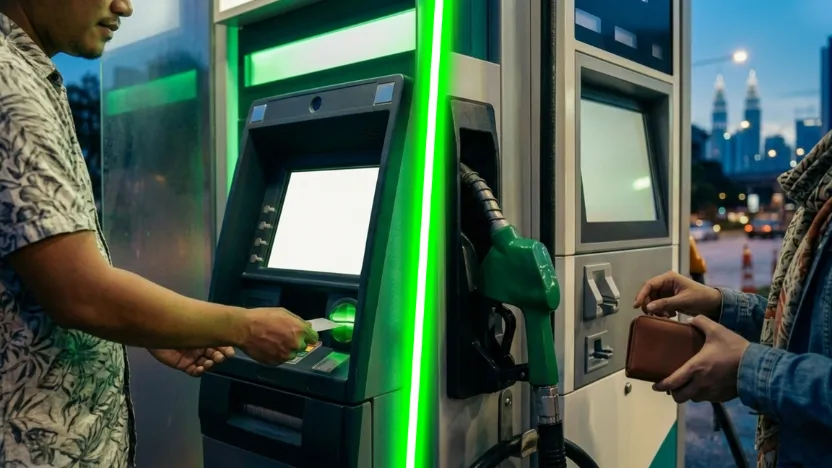
Starting July 1, customers of all banks in Malaysia will no longer have to pay the RM1 interbank cash withdrawal fee when using another bank's Automated Teller Machine (ATM).
Under the new initiative, debit cardholders can enjoy unlimited free cash withdrawals at more than 14,000 ATMs nationwide, regardless of which bank issued their debit card. The move is expected to provide greater convenience and reduce banking costs for consumers.
2. BUDI Diesel and BUDI95 to be merged
The government will officially merge the BUDI Diesel and BUDI95 subsidy programmes from July 1 through the use of MyKad.
Eligible Malaysians can check their qualification status through the official BUDI MADANI portal beginning June 22. Those who believe they qualify but are not listed may submit an application through the portal or at any Inland Revenue Board of Malaysia (IRB) counter.
Under the new system:
- Eligible private diesel vehicle owners will enjoy a subsidised diesel price of RM2.10 per litre.
- Commercial vehicles registered under the Subsidised Diesel Control System (SKDS) 2.0 will pay RM2.15 per litre.
- Non-citizens and industrial users will not receive diesel subsidies and will continue purchasing fuel at market prices.
The initiative aims to ensure fuel subsidies reach eligible recipients while reducing subsidy leakages.
3. DBKL introduces multi-year business licence renewals
Business owners operating within Kuala Lumpur can now renew their business licences for up to three years starting July 1.
As part of the initiative to improve the city's business ecosystem, Kuala Lumpur City Hall (DBKL) will also offer:
- 5% discount for two-year licence renewals.
- 10% discount for three-year licence renewals.
The discounts are subject to conditions, including that the licence holder has no outstanding compounds or rental arrears with DBKL.
4. EPF contribution payment counters to close
The Employees Provident Fund (EPF) will permanently close all contribution payment counters at its offices nationwide beginning July 1 as part of its digital transformation initiative.
The closure only affects contribution payment transactions and receipt collection. Members can still visit EPF branches for other services, while employers and contributors are encouraged to make payments through EPF's online digital channels.
5. Imported electric vehicles expected to cost more
Fully imported electric vehicles (EVs) are expected to become significantly more expensive from July 1 following the implementation of new import requirements introduced by the Ministry of Investment, Trade and Industry (MITI).
Among the new requirements are:
- A minimum Cost, Insurance and Freight (CIF) value of RM200,000 per imported EV.
- A minimum power output of 180 kilowatts (kW).
Industry analysts expect these changes to push showroom prices of imported EVs to around RM300,000 and above after factoring in import duties, excise duties, the 10% Sales and Service Tax (SST), and distributor margins.
The policy is intended to encourage global automotive manufacturers to establish local assembly operations while strengthening Malaysia's domestic EV industry.
From lower banking costs and targeted fuel subsidies to digital EPF services and changes in the EV market, July 1 marks the implementation of several nationwide policies that will affect consumers, businesses, and motorists alike.
Those affected are encouraged to review the new requirements and ensure they are prepared before the changes officially take effect.
Source : freemalaysiatoday , KWSP